

MODEX 2026

Date : April 13, 2026 - April 16, 2026
Venue : Georgia World Congress Center, Atlanta, Georgia
Slip Robotics Floor Locations : Booth A2809, Booth C12965

modex-2026-slip-robotics
Trusted by Industry Leaders
2026-SR-W-Manifest-019

What is MODEX 2026?

 MODEX 2026 is the place to be for anyone who wants to see the latest advances in supply chain automation, robotics, and warehouse technology. With more than 1,000 exhibitors and over 200 free educational sessions, it gives leaders a strong opportunity to gather practical insights and discover new solutions that can help them stay competitive in a fast-changing logistics industry.
2026-SR-W-Manifest-017

When Will MODEX 2026 Happen?

MODEX 2026 will run from Monday through Thursday, April 13–16, 2026.

The schedule includes a Monday keynote at 9:00 a.m. featuring Richard McPhail, CFO of The Home Depot, who will speak about current supply chain trends. On Tuesday at 9:00 a.m., Salim Ismail, Founder and Chairman of OpenExO, will present on AI and transformation. Wednesday’s keynote lineup includes Dale Earnhardt Jr. at 9:00 a.m., followed by MHI CEO John Paxton and Deloitte’s Wanda Johnson at 1:00 p.m.

The day will wrap up with MHI Industry Night on Wednesday evening, including a stand-up set by comedian Jim Gaffigan.

You can check the official keynote agenda for the latest updates on the times and room locations of MODEX 2026 keynotes.
2026-SR-W-Manifest-015

Where Will MODEX 2026 Take Place?

MODEX 2026 will take place at the Georgia World Congress Center in downtown Atlanta, located at 285 Andrew Young International Blvd NW, Atlanta, GA 30313.

Free event shuttles usually operate between the Georgia World Congress Center and select official show hotels.
What Can I See at MODEX 2026?

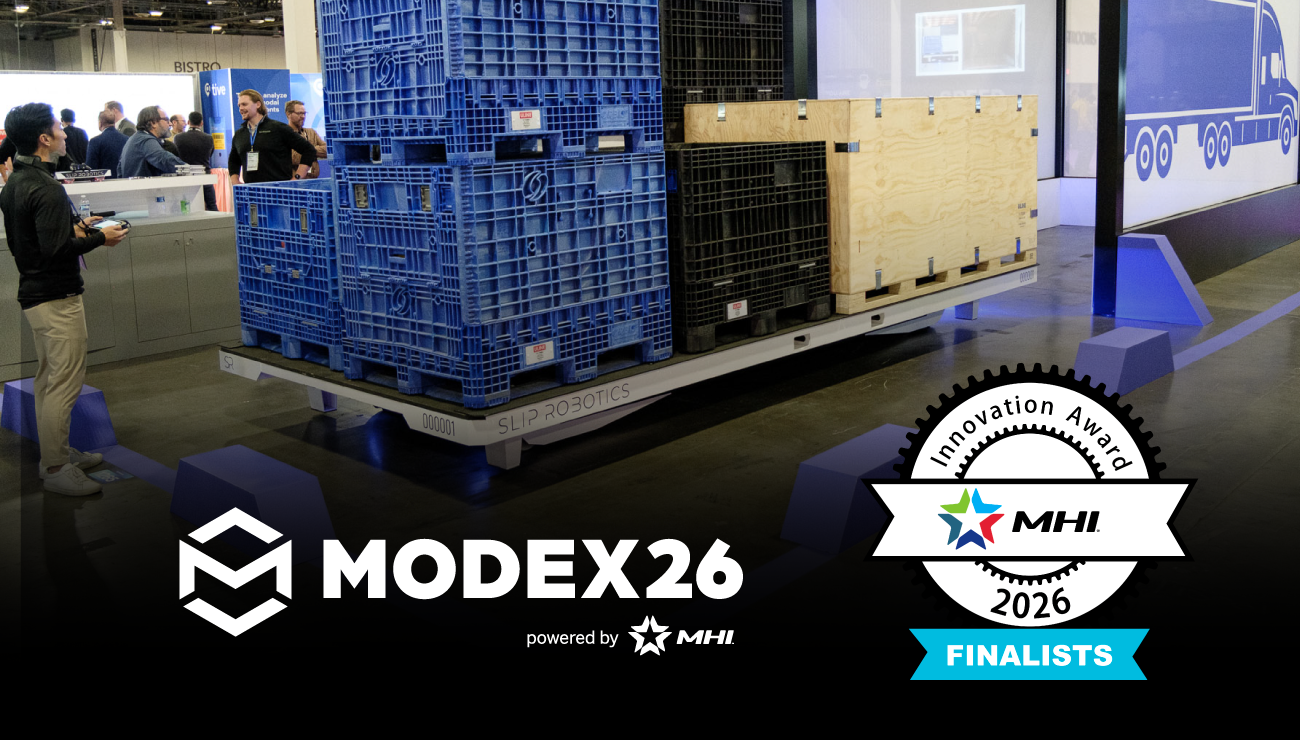
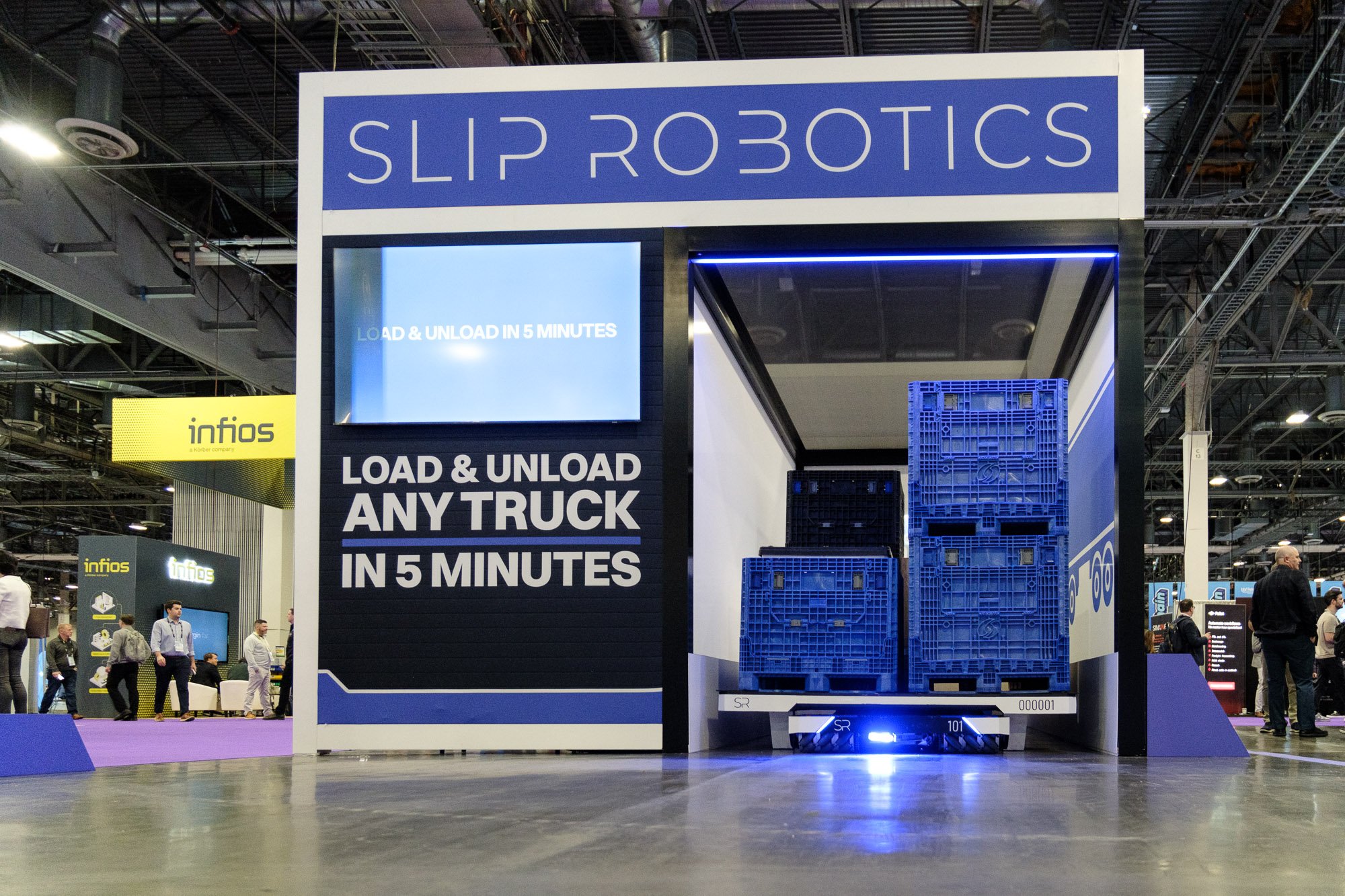
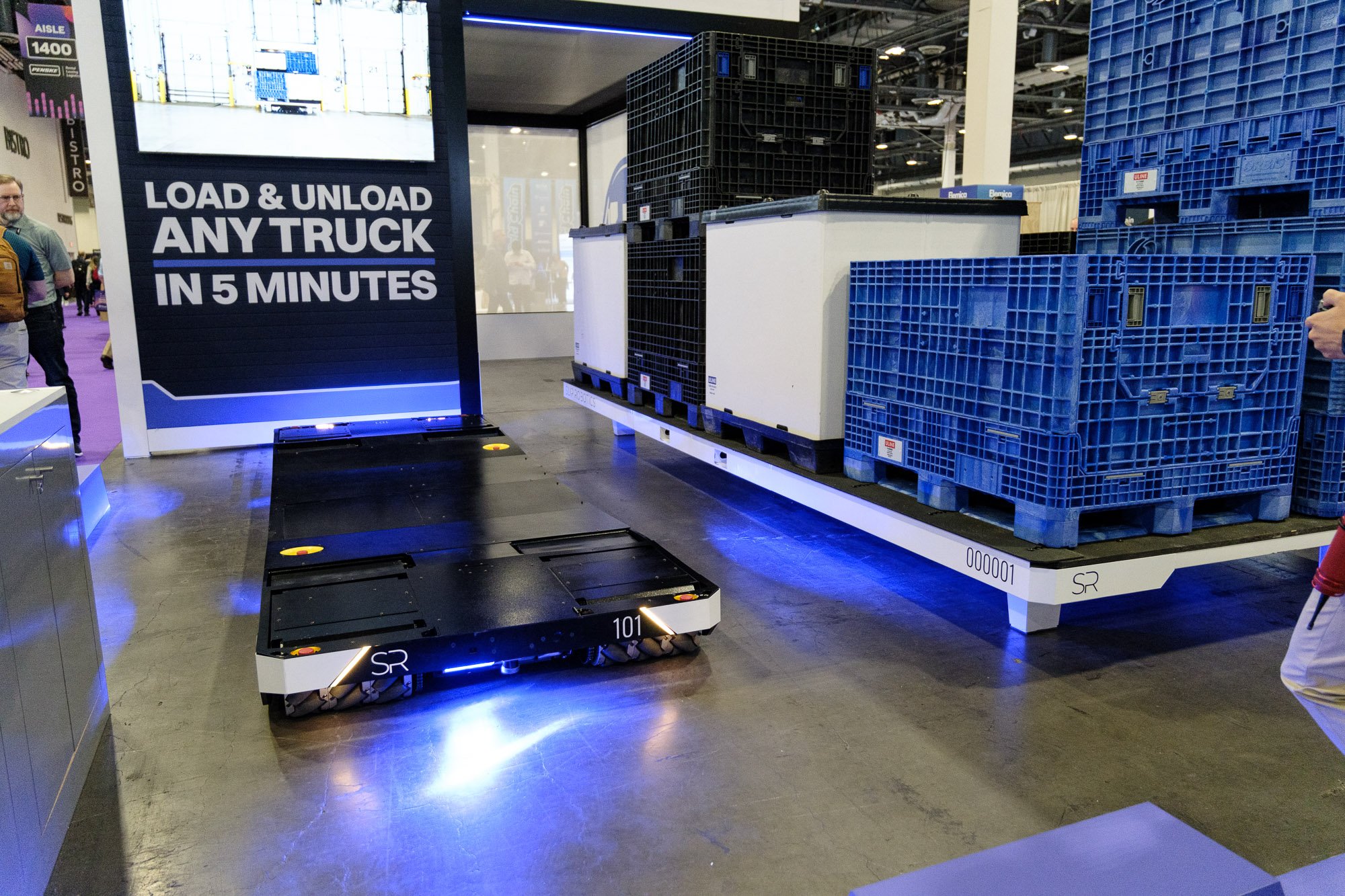
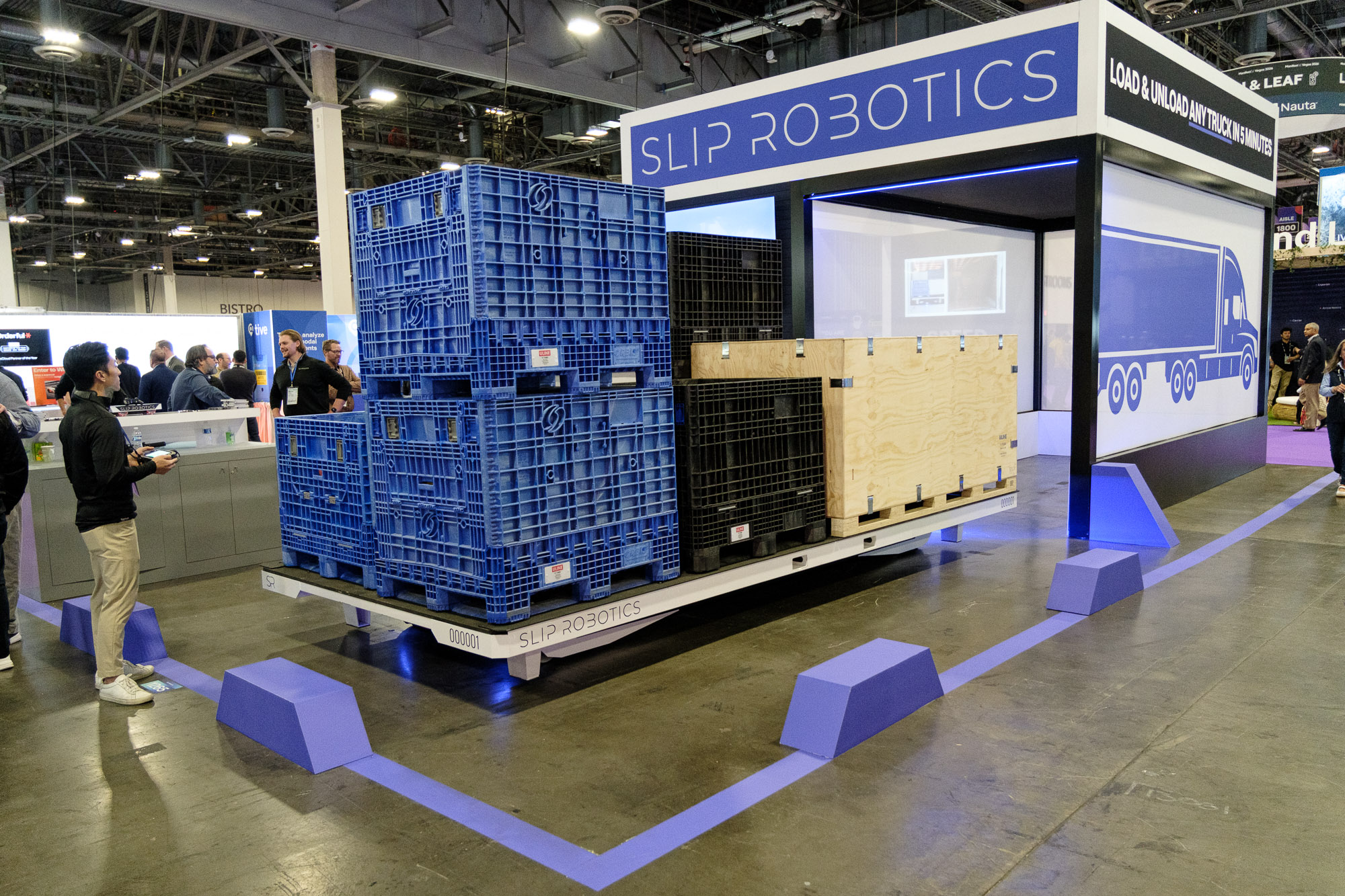
MODEX 2026 will bring together more than 1,000 solution providers representing the full range of material handling, logistics, and supply chain technology. The show floor will spotlight end-to-end supply chain solutions, including live demos of warehouse automation and robotics, AMRs, AS/RS, conveyor and sortation systems, execution and planning software, supply chain visibility and analytics, and other intralogistics technologies. Attendees can use the official exhibitor directory to sort exhibitors by product category and map out their visit. Slip Robotics will exhibit our SlipLift platform (pictured below), which was recently nominated for the MHI Innovation Award.


Slip Robotics and SlipLift at MODEX 2026. 

At MODEX, Slip Robotics will exhibit and demonstrate our SlipLift platform, which was recently nominated for the MHI Innovation Award.

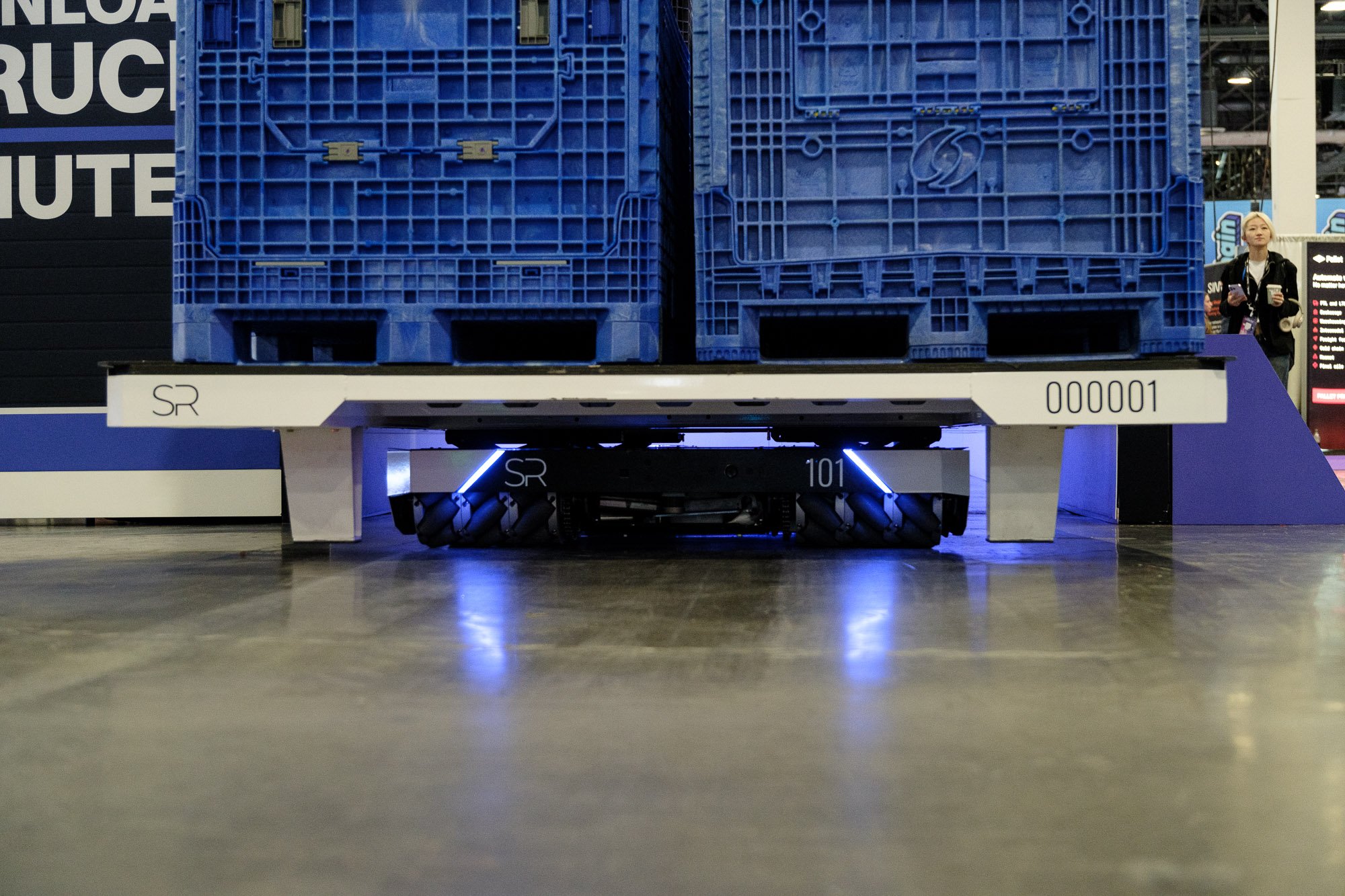
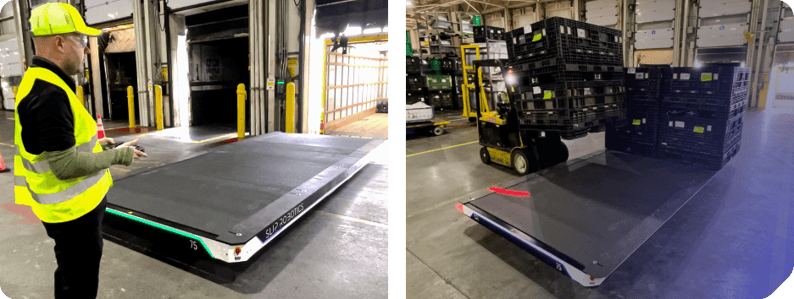
Built to address one of the most persistent bottlenecks in the supply chain, SlipLift automates trailer loading and unloading at the dock, where delays often create ripple effects across labor, inventory, production, and transportation. Unlike traditional approaches, SlipLift keeps the robot at the dock and moves freight on passive SlipCarrier Trays, making automation more scalable and practical across a wider range of operations. The platform supports payloads up to 20,000 pounds and is designed for heavier freight, mixed routes, last-mile networks, and lower-frequency moves. By reducing manual effort inside trailers and bringing more consistency to trailer turns, SlipLift helps facilities improve throughput, reduce dwell time, and create safer, more predictable dock operations.

2026-SR-W-Booth-016

What Can I See at MODEX 2026?

MODEX 2026 will bring together more than 1,000 solution providers representing the full range of material handling, logistics, and supply chain technology. The show floor will spotlight end-to-end supply chain solutions, including live demos of warehouse automation and robotics, AMRs, AS/RS, conveyor and sortation systems, execution and planning software, supply chain visibility and analytics, and other intralogistics technologies. Attendees can use the official exhibitor directory to sort exhibitors by product category and map out their visit. Slip Robotics will exhibit our SlipLift platform (pictured below), which was recently nominated for the MHI Innovation Award.


Slip Robotics will exhibit our SlipLift platform (pictured below), which was recently nominated for the MHI Innovation Award. 

Built to address one of the most persistent bottlenecks in the supply chain, SlipLift automates trailer loading and unloading at the dock, where delays often create ripple effects across labor, inventory, production, and transportation. Unlike traditional approaches, SlipLift keeps the robot at the dock and moves freight on passive SlipCarrier Trays, making automation more scalable and practical across a wider range of operations. The platform supports payloads up to 20,000 pounds and is designed for heavier freight, mixed routes, last-mile networks, and lower-frequency moves. By reducing manual effort inside trailers and bringing more consistency to trailer turns, SlipLift helps facilities improve throughput, reduce dwell time, and create safer, more predictable dock operations.

Frequently Asked Questions

What kind of freight can SlipBots handle, and what’s the payload capacity?

SlipBots can handle nearly any freight type—pallets, totes, bins, racks, loose items, and even non-stackable or hand-loaded freight. Each SlipBot has a payload capacity of 12,000 lbs, with three SlipBots per trailer for a total truckload capacity of 36,000 lbs. For heavier applications, the SlipHeavy model increases capacity to 20,000 lbs per bot—up to 60,000 lbs per truck. Payload is tracked in real time via an onboard scale, with readouts displayed on the controller and LED indicators on the bot for quick visibility.

How much room do I need on my dock?

SlipBots operate in the same space you already use to stage materials—no additional floor space required. In fact, their ability to rapidly load and unload can help free up valuable dock space by reducing dwell time. Equipped with omnidirectional wheels, SlipBots maneuver easily in tight areas, allowing for flexible placement and smooth operation in nearly any facility layout.

How long do SlipBots run, and how are they charged?

SlipBots are designed for continuous industrial use and can operate without plugging in. Each unit has two swappable lithium-ion batteries that trickle-charge the main internal battery throughout the day. Swapping takes less than 2 minutes and provides up to 10 hours of runtime.

The main battery can power a SlipBot for up to two full days of use and rarely needs direct charging. All SlipBots meet DOT safety standards and use lithium-ion batteries well below hazmat thresholds, so there are no special requirements for transport or handling.

Is it safe for SlipBots to operate around people and forklifts?

Yes. SlipBots are built with multiple onboard safety systems to navigate busy loading docks with precision. They use sensors, lidar, and vision systems to detect obstacles and people in real time—ensuring safe operation in shared environments. They’re designed to stop automatically if something enters their path and can operate seamlessly alongside your existing equipment and teams.

How long does it take to deploy SlipBots?

Most sites are up and running in less than a week. SlipBots require no changes to your docks, trailers, or infrastructure. Our team handles setup, training, and supervised operations—so your staff is confident, your process stays intact, and your operation sees value almost immediately.

What kind of training or change management is needed?

Training doesn’t stop after deployment. Slip supports your team from day one and every day after. We provide hands-on training during installation, then continue to support ongoing coaching, process optimization, and team onboarding for as long as you have SlipBots on-site. As your operation evolves, we help ensure your automation continues to deliver maximum value.

What does maintenance and support look like?

Our team monitors every SlipBot in the field and provides proactive support as part of your subscription. With remote diagnostics, on-site service, and regular updates, we keep your system running smoothly—so your team can stay focused on moving freight.

How much does a SlipBot system cost under your Robots-as-a-Service model?

SlipBots are offered through a monthly Robots-as-a-Service (RaaS) model that most customers treat as an operating expense. There’s no large upfront investment—just a flat monthly fee that covers the robots, support, updates, and ongoing maintenance. After a quick intro call, we’ll provide a tailored ROI analysis and cost estimate based on your operation’s specific needs.

How is Slip’s pricing model different from buying or leasing equipment?

Slip uses a Robots-as-a-Service (RaaS) model—offering SlipBots through a monthly subscription rather than a large upfront capital expense or a basic lease. Unlike traditional leasing, our model includes full support, maintenance, software updates, and hardware upgrades. You get continuous improvements and hands-on service without the burden of ownership.

Can you help us build the business case?

Absolutely. After your initial call, our team will work with you to build a detailed ROI analysis based on your dock volumes, labor costs, and trailer flow. We help quantify the time and cost savings, making it easy for your team to evaluate the opportunity and justify the investment internally.

Talk to Us About Your Dock

Seeing is believing - but even if you’re not ready for a demo, we’re here to talk. We offer free SlipLift and SlipBot demonstrations to show just how fast, simple, and safe automated trailer loading can be. Whether you’re ready to schedule or just want to explore how it could work at your dock, our team is happy to connect.

Want A Free Demo?

  • Schedule an intro call with our team.
  • Discuss your project with our team.
  • Our team will work with you to bring a  SlipLift or SlipBot to your dock.
slip-robotics-demo-process-1